
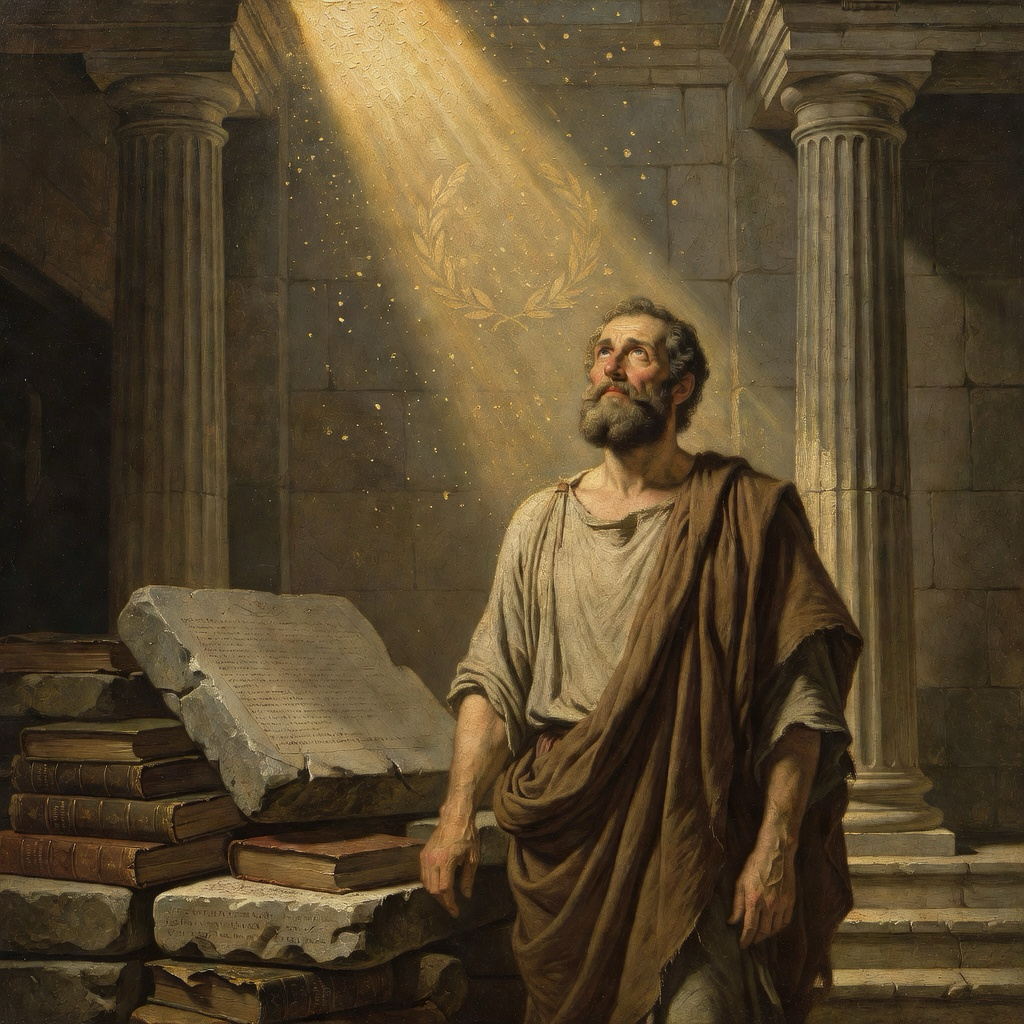
Pietas Quest Question: Is true morality the same as keeping the rules?
No. Rule-keeping that becomes an end in itself is legalism—a caricature of true morality grounded in social norms rather than the law of nature and the Creator. True morality is fulfilled in following the dictates of conscience; its greater pleasure is doing one’s duty and contentedly entrusting the rest to Providence. That fusion is pietas.
For avoiding slavery to the belly or to sleep and incontinence, is there, think you, any more effective specific than the possession of other and greater pleasures, which are delightful not only to enjoy, but also because they arouse hopes of lasting benefit? – Xenophon, Memorabilia
There is a dangerous tendency in discussions of morality and virtue to reduce both terms to mean little more than a set of rules to be followed (sometimes blindly) with little regard to "why." It is a source of pride, even of vanity, in some circles to reduce conscience and reason to no more than nuisances to be muzzled or, at best, props to be used for one's own agenda. These erect echo chambers within which only voices that parrot the party line are permitted, and the loudest are typically the most honored.
In such situations, following the rules becomes an end in itself. This legalism is a caricature of true morality because it is grounded in false presuppositions and social norms rather than the law of nature and the Creator from whom that law issues. "Discipline," which properly means to curb one's appetites to achieve some greater good, is perverted into chastisement and manipulation. "Accountability," cooperating with others to achieve one's full potential as a moral being, devolves into surveillance and two-facedness.
This blind legalism is not the same thing as humble acknowledgment that one is not omniscient and needs help understanding what is true and good. The difference is in the object: such humility holds others' opinions as useful but contingent on being proven true, whereas legalism is driven by either laziness, fear, or a combination of the two. The legalist fears being ostracized from his social circle or is so uninterested in discovering what is true for himself that he outsources his thinking to others.
But there is at least one reliable stimulant to seeing legalism for the caricature that it is: pain. Legalism cannot point to a higher purpose for its rules than the rules themselves, and there is nothing worse than pain without purpose. By contrast, true morality is inherent in the design of reality and human nature at its best. It is in following the dictates of conscience that one fulfills that design, which is accompanied by a satisfaction great enough to make the suffering it sometimes involves worthwhile.
Whether accompanied by suffering or free from it, doing one's moral duty and contentedly entrusting the rest to Providence are, as Xenophon puts it, "delightful not only to enjoy, but also because they arouse hopes of lasting benefit."
That lasting benefit is the highest purpose that mankind can achieve. Pietas is how we achieve it.
 Join the Pietas Quest