
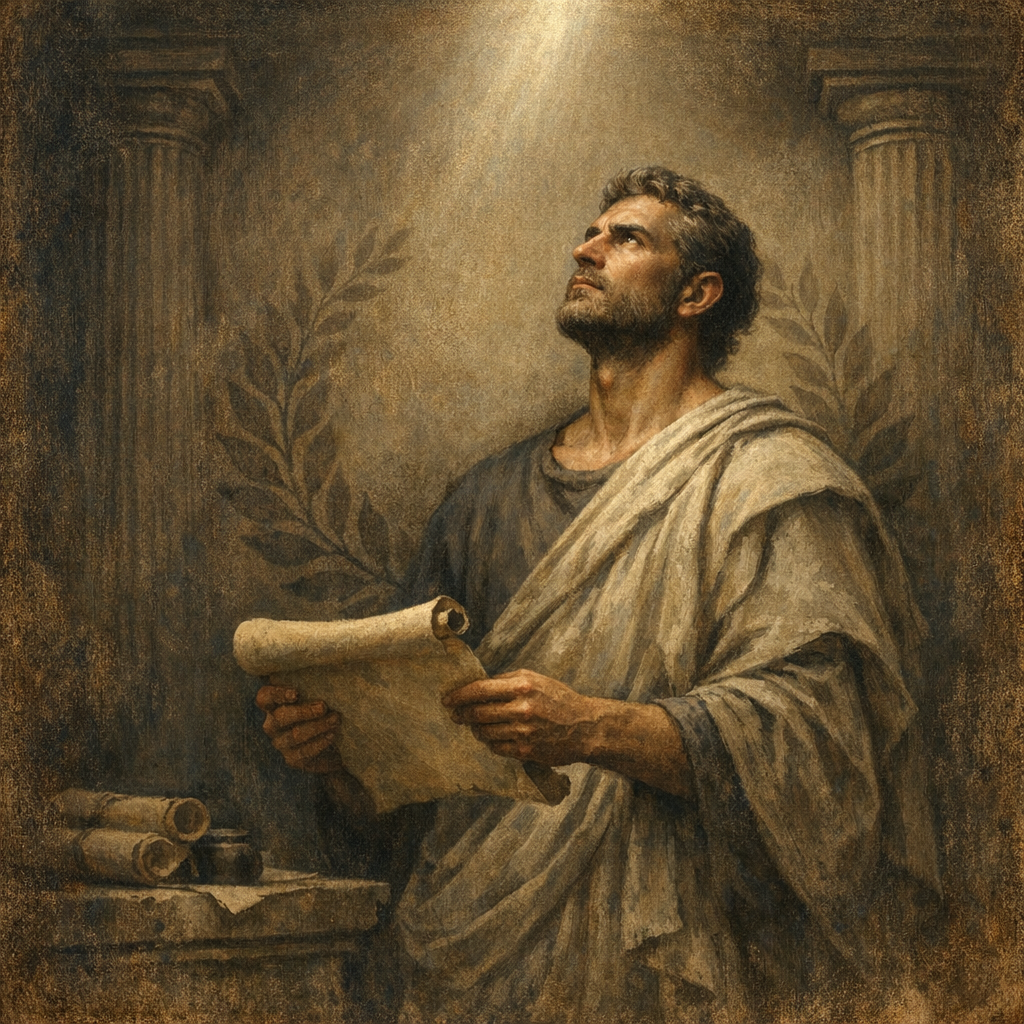
Question: Can a man perfect his soul through his own efforts alone?
No. While the ancient pagan philosophers rightly insisted that moral excellence requires disciplined effort, they frequently overstated man’s self-sufficiency. The Christian moral realists who shape the Pietas Papers understood that true human flourishing demands not only striving but also contented resignation to divine Providence.
...man's philosophic and moral restlessness proves that, without violence to self-evident truth, he has found no way of harmonising himself by his own excellence, or solely by his own good works, with his entire environment, including conscience, God, and a record of deliberate sin in an irreversible past. — Joseph Cook, The Soul and Its Environment
Readers of the Pietas Papers are familiar with the author’s frequent recourse to the ancient pagan philosophers, especially the Roman Stoics. Truth is truth regardless of who discovers it, and the ancients gave humanity some of the most insightful minds and eloquent writers and speakers to have ever expounded upon the perennial questions of man’s nature and purpose.
However, these ancients were not infallible (as they themselves would admit). One point in which they, including and perhaps especially the Stoics, often erred concerned man’s self-sufficiency. In many of their writings, there is a sense that one can perfect his soul through his own efforts, isolated from any external assistance.
The Christian thinkers who shape the Pietas Papers, from Boethius to John Witherspoon and James McCosh, see the matter in a different light. They affirm the duty of man to grow into and live in accordance with his moral purpose and nature, but they acknowledge his insufficiency to do so on his own. Woven throughout their discourses on moral duty is an acknowledgment of and gratitude to divine Providence, contented resignation to which is a necessary precondition for man’s full flourishing as a moral being.
This detracts nothing from the ancient pagan philosophers, who help us understand that goodness is worth pursuing, regardless of whether man can achieve it on his own. This is a lesson the modern West is in desperate need of relearning, and no assistance to this end should be refused. As C. S. Lewis observed, “No man knows how bad he is till he has tried very hard to be good.”
The ancient pagans taught us to try to be good.
But those counsel us to look to Providence with contented resignation teach us to succeed.