
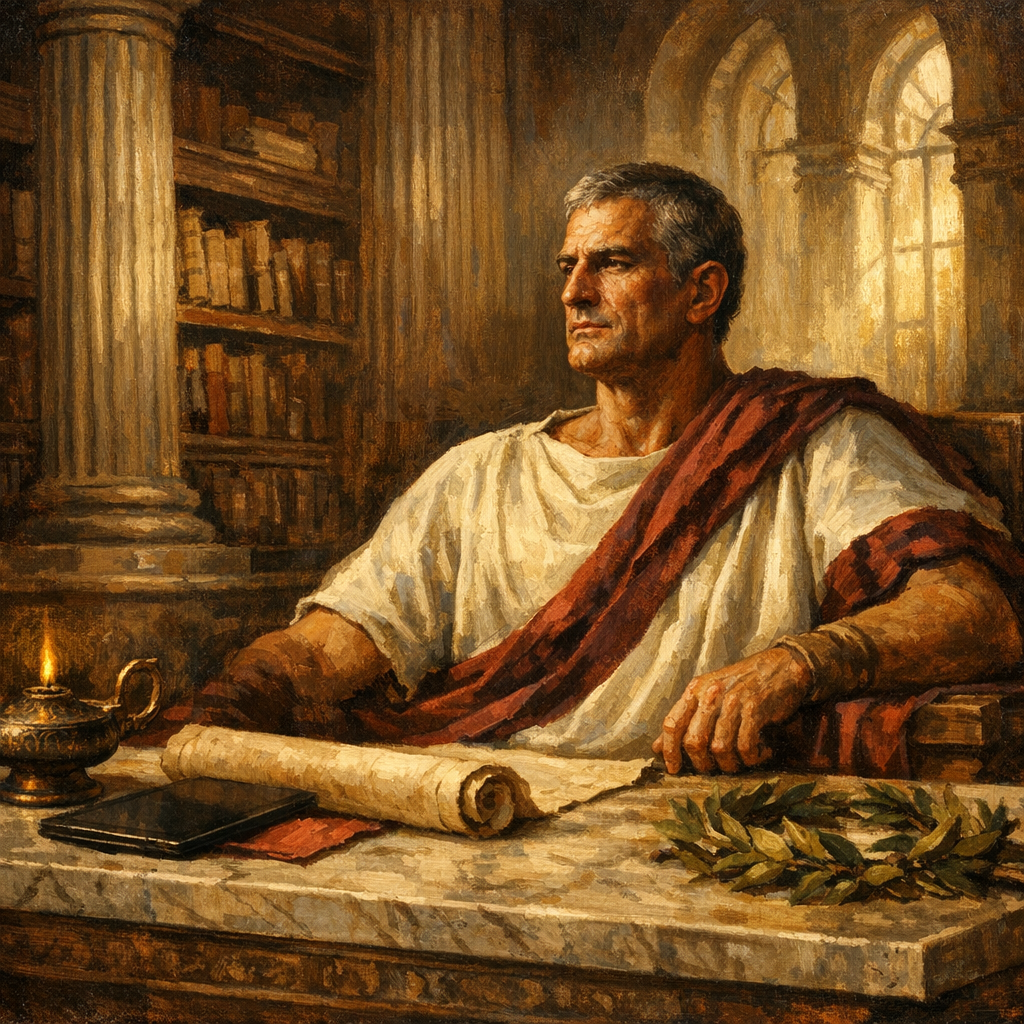
For the wise man does not consider himself unworthy of any gifts from Fortune’s hands: he does not love wealth but he would rather have it; he does not admit into his heart but into his home; and what wealth is his he does not reject but keeps, wishing it to supply greater scope for him to practice his virtue. — Seneca, On the Happy Life
Seneca wrote these words as a man who had tasted Fortune’s full range. Advisor to emperors, owner of vast estates, exile and eventual suicide at Nero’s command: he knew the wheel turns without warning. Yet he refused to let wealth, or its loss, dictate his inner state. The wise man accepts Fortune’s gifts without attachment, using them not as ends but as means. Wealth enters the home, not the heart; it expands the field where virtue can be exercised. To cling to it is folly; to reject it outright is ingratitude. The point is mastery: let it serve duty, not enslave the soul.
This perennial wisdom does not fade as technology accelerates. It sharpens. The gifts of Fortune today arrive faster and in greater abundance than Seneca could have imagined. Devices that connect the world in an instant, algorithms that anticipate desires before they form, tools that multiply productivity and reach: these are the modern estates and treasuries. They promise scope without limit: build empires from a desk, influence masses with a keystroke, secure comforts that emperors envied. Yet without the wise man’s discipline, they do not expand virtue; they erode it. The heart admits what should remain external, and a man finds himself loving the gift more than the practice it enables.
Pietas demands we receive these gifts rightly. It is the fusion of duty and contentment that turns technological acceleration into advantage. Duty requires a man to use technology as a servant of conscience, not a substitute. Contentment keeps the heart free, accepting the tools without needing them to define worth or peace. A man who masters this stands firm amid the surge; he employs the speed of the age to discharge greater duties, while resting in Providence for what lies beyond his grasp.
The Stoics lived this in their own era of expansion. Cicero, facing Rome’s growing wealth and corruption, insisted in On Duties that true riches lie in virtue, not in accumulation. Washington, amid the rapid changes of revolution and nation-building, accepted the command of armies and the presidency not for personal gain but as scope to practice the virtues that secure liberty. He resigned power when duty was done, content with his farm and conscience. In each case, external gifts enlarged the field of moral action without capturing the inner man.
Our time multiplies the field exponentially. A single post can reach thousands; a tool can automate labor that once took days. This scope tempts a man to love the wealth: to measure his life by metrics, followers, or efficiencies. He builds platforms but neglects the soul they should serve. He connects globally but drifts from duty at home. The result is not flourishing but fragmentation: a life of constant motion without direction, endless gifts without gratitude or mastery.
The wise man sees the opportunity. Technology supplies greater scope for virtue precisely because the temptations are greater. Use the device to speak truth where silence reigns. Employ the algorithm to build communities of accountability, not echo chambers of pride. Accept the efficiency to free time for contemplation and service, not for idle distraction. Duty calls a man to wield these gifts with restraint; contentment ensures he can lose them without loss of self. In this way, acceleration becomes the forge where virtue is tested and strengthened.
A man who rejects technology outright denies Fortune’s gifts and limits his scope unnecessarily. A man who loves it admits it to his heart and becomes its slave. The middle way of pietas accepts it into the home: keep it, use it, but order it to virtue. Begin each day by asking what duty the day’s tools enable. End by examining whether they served conscience or subverted it. These small acts build the discipline Seneca described: the wise man’s quiet command over what Fortune sends. This week, consider where in your use of technology a gift from Fortune entered your heart rather than stayed in your home, and what single adjustment you will make tomorrow to reorder it toward greater scope for virtue.
Fortune’s gifts come swiftly now, but the wise man remains the same. He does not love them but would rather have them. He keeps them to practice greater virtue. In this lies true flourishing: a life ordered by duty, steadied by contentment, measured by conscience alone.