
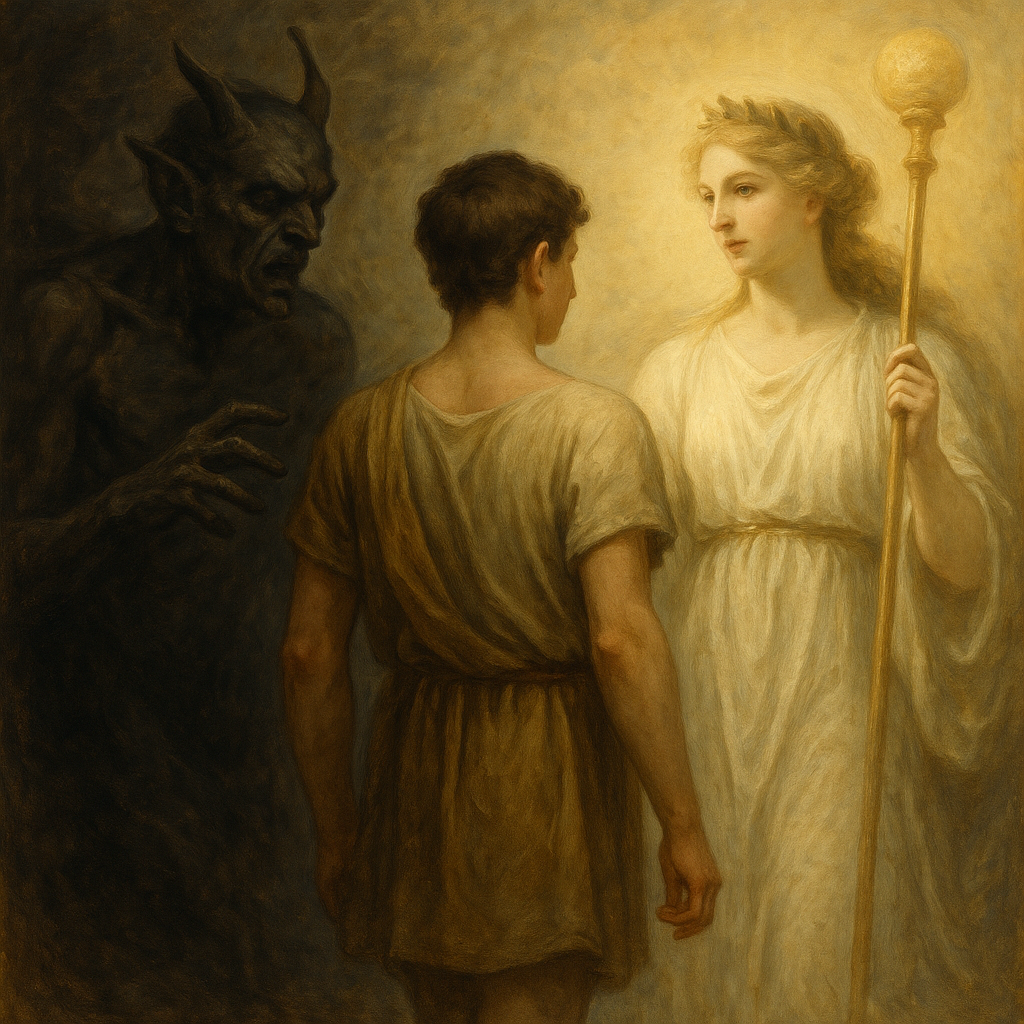
Pietas Quest Question: Why is selectivity in trust and companionship essential for moral formation and the pursuit of pietas?
Direct Answer
Before pietas, we often give trust indiscriminately, allowing negative influences to shape our soul and blunt our conscience. After pietas, we become deliberately selective about who we allow to influence our character, choosing those whose virtue we admire, thereby protecting and strengthening our own moral development.
As one of the poets says: "From the good shalt thou learn good things; but if thou minglest with the bad thou shalt lose even what thou hast of wisdom." - Xenophon
There was a time when I thought that to be a good and sociable person, I had to give everyone the benefit of the doubt and trust them until they proved they didn’t deserve it. But the wise men whose works I read thought differently. They taught that, while we should respect others, they are not entitled to our trust until they earn it.
The reason is that these great thinkers accurately viewed the soul as highly malleable: it takes on the shape and characteristics of whatever and whoever we are constantly in contact with. The timid are made more so in cowardly company, but getting them around men of courage puts steel in their spines. A fence-sitter who hasn't committed to either virtue or vice will likely follow whoever he happens to be around. Even one with a cultivated conscience can't help but have his moral sense blunted if he's constantly under the influence of the unscrupulous.
That is not to say that those cultivating pietas should cloister themselves away and avoid any interaction with the unvirtuous. To do so would be impossible, for one thing. For another, the imperative to respect and serve others extends to all, regardless of their morality. But to respect and to trust are different things. While we should treat everyone we meet with respect, we should be selective about who we trust to influence our character.
An easy way to gauge whether someone deserves that trust is to ask, "Is this person someone I want to be like?" The answer to that question provides at least a starting point in determining how much of our limited time and attention they should get.
It's also useful to reverse that question to keep ourselves accountable in our pursuit of pietas: "Am I someone (or, at least, becoming someone) others should want to be like?"
 Join the Pietas Quest